Tuesday, April 27, 2010

Little Bee, by Chris Cleave

I have to say it: This book is why I started this blog. This book, and the small circle of other great novels that leave you feeling charged and changed at the end are why I'm typing these words. Why I've always pestered my friends, pleading, "Read this! Read this!" Yes, in writing about "Little Bee" I'm a little "farklempt," as Barbra would say. And what can I say, except that this is the best, the most compellingly perfect novel I've read in a long, long time.

I must admit I didn't really want to read "Little Bee." I love reading about far-off cultures, but, to be honest, I just didn't feel up to reading another book set in Africa. The never ending violence, the unstable governments, the widespread hunger, they all leave me feeling so hopeless. And, of course, the U.S. always shows up as a minor character, fueling friction between waring groups, sticking its dirty, monied hand into the pot. So when I read a book set in Africa, not only do I face hopelessness, I feel guilty, too.

About the plot - there is very little I want to say here. When I listened to this audiobook I hadn't heard a thing about the storyline, and the surprise was just delicious. Given that, I will say that the story is told in two voices. There is the title character of Nigerian refugee Little Bee, whose lyrical and wise-beyond-her-years voice is beautifully captured. And then there is Sarah, the yuppie magazine editor, whose path crosses Little Bee's. Unlike Little Bee, Sarah is not a completely likable character, but in the details revealed about each of the characters, the author renders them both completely believable.

Cleave kept me breathless with suspense and a pace that never let up, and all this with prose that just stunned. My favorite line, spoken by Little Bee: "I did not want to tell her what happened, but I had to now. I could not stop talking, because now I had started my story, and it wanted to be finished. We cannot choose where to start and stop. Our stories are the tellers of us." Gulp.

Chris Cleave has masterful storytelling skills. I am so convinced you will love this book that I'm almost inclined to offer a refund to anyone who doesn't. I so rarely fall completely head-over-heels for a book. Please read it!

Monday, April 26, 2010

A Hatred for Tulips, by Richard Lourie

Anne Frank appears as an icon in many novels that take place in the time of the Holocaust, exemplifying the theme of hope surviving amidst evil. When I made a mental survey of the novels I've read that use Anne Frank as a jumping off point, riffing on the powerful themes of good and evil, "A Hatred for Tulips" immediately came to mind. This is a disquieting book, one that shakes up the way we tend to pigeonhole the world around us and like it to line up in neat rows. It's only natural to want to spot the good guys, to be able to tell them apart from the bad guys. If only the gray of our world could be unmixed, and separated back into the pure, contrasting colors of black and white, our lives would be much simpler.


In "A Hatred for Tulips," Lourie mixes it up and takes us out of our comfort zones. Did Joop, ostensibly the bad guy, really turn in Anne Frank's family, as he claims he did? Or is his confession a ruse, used to either elicit sympathy from his brother or to hurt him? Can someone who does the unthinkable, an unsympathetic character, evoke sympathy? Can the bad guy's action be explained and change our perception of him? And can the good guy be bad?

In a stark retelling of his childhood, a sad-sack Joop reunites with his brother and immediately spills the secret that he was the informer who turned in the Frank family. The back story, which compellingly informs the ambiguous dialogue that is spoken at this reunion, takes up most of the book. As a child, before the war, Joop gets short shrift in the family, and suffers. After the war, Joop gets the short straw again. He is left in Amsterdam with his alcoholic and abusive father, while his brother Willem leaves for America with their mother. At first, the contrast between the two brothers is black and white. Joop got the "bad" parent, led a lonely, single life and worked in a factory, while Willem left for the promised land of America with the "good" parent, married and had children, and had every advantage. But then the lines blur.


In speaking to his brother for the first time in sixty years, Joop tells of a lifetime of events that don't excuse his terrible deed, but perhaps explain it. He is the quintessential victim, and as the world around him spins out of control he gets none of his needs met and is constantly blamed for things completely out of his control. By confessing to this terrible crime, though, Joop becomes a victim himself. If we believe him, that he indeed was the informer, we bestow victim status on him; he claims that through his own guilt, he has suffered more than Anne herself. One might (naturally) imagine the informant of the Frank family as a villain, but in Joop's own eyes, it is not the Franks, but he who is the victim. This one mistake, driven by bile and jealousy, leads Joop to carry with him a guilt that surrounds him like a cloud, closing out the life he might have had.

What I really liked about "A Hatred for Tulips" is that in the end, it didn't wrap things up in neat packages. Like so much of real life, life outside the pages of a novel, the truth of a situation is often never discovered. Or there turn out to be many facets of the truth. Just as in life, "A Hatred for Tulips" is a study in shades of gray.

Thursday, April 22, 2010

Mona Simpson

Butler has played host to a diverse array of authors this year. I've heard Junot Diaz ("The Brief, Wondrous Life of Oscar Wao") who wowed me with his bad-boy persona, all attitude. I've heard Edwidge Danticat speak eloquently on the devastation wreaked on her Haitian homeland by the recent earthquake. I've heard the erudite Mark Strand read his poems to the young, Butler crowd whose world seemed light-years away from his.

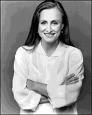
Mona Simpson, who ironically, drew the smallest crowd of all these authors, was by far the most relatable and accessible. I haven't had the chance to read any of Simpson's novels yet, but she described her newest, "My Hollywood", as a novel in two voices: one, a white, middle-class, woman with a baby, and the other, a 52 year-old Filipina immigrant who works as her nanny.

Simpson shared many pearls of wisdom about her craft. In referring to her upcoming novel, she remarked how ironic it was that the voice of the "other," the Filipina character, was the voice she felt was the easiest for her to capture.

I asked her if, as she begins the process of writing a novel, she has the entire plot already in her head. She answered that she doesn't - although she is usually aware of the signposts that would guide her way.

She was asked what she knows now that she wishes she knew at the start of her writing career, and she shared that she wishes she knew she didn't have to be so afraid of how she appears. She said she had aspired to be a Primo Levy, or a Tolstoy, and not a "Ladies' Home Journal" writer, but that over time she has become more comfortable in who she is as a writer. That seemed to be an important piece for her, and was something she thought was important for us all - to become comfortable in who you are and what you do best, no matter what that is.

Mona Simpson didn't have the bravado of Diaz or the emotional distance of Strand, but she was candid, genial and open, and a great close to this year's Butler Writers Series.

Wednesday, April 21, 2010

Imperfect Birds, by Anne Lamott

There is nothing, absolutely nothing, I like better than to sink my teeth into Anne Lamott's non-fiction stories. Lamott has a genius for finding just the right words to shine a light on the shadowiest, wormiest parts of us - the parts we all strive to hide. In the warmth of this light she creates a sense - within the messiness of our shared flaws - of our shared humanity. There is the glow of a higher power at play in her writing, one that flickers from the acknowledgment of the vast distance that lies between the kind of person we strive to be, and the person we actually end up being - how we fall short, day after day, on life's journey.

Lamott and I have a few things in common, so I have always felt a kindred spirit with her. We both grew up around the San Francisco Bay Area, and each sport somewhat troubling histories of risk-taking in our younger years as we learned to navigate the transition to adulthood. Yes, there were drugs, and also, in her case, a long-lasting love affair with alcohol. So it has always deeply troubled me that I haven't found the same wonderment in Lamott's works of fiction that I have in her non-fiction books. Still, I know my fiction gene is underdeveloped, so I have blamed myself for not finding joy in her fiction, and kept this disappointment as my own dark, dirty secret. I awaited my copy of "Imperfect Birds," a little nervous, yet eager to break through and find the delight she's so famous for in her non-fiction.


So, I'm still struggling here. There is so much that I "got" in this story. I saw (and related to) the protagonist, Rosie, a crazy, manipulative, drug abusing teen, and her pain. I saw, and unfortunately related to, Elizabeth, Rosie's over-identifying mother, as she time and time again buys into the lies that Rosie tells her. But there is something missing for me in Lamott's storytelling, and I just don't know what it is. There is lots of "telling" in this novel, lots of interior dialogue, and maybe that just wasn't enough action to keep the story moving along enough to hold me. None of the characters were particularly likable, and perhaps this was only an issue because neither Rosie's mother or step-father felt completely fleshed out, and realistic.

A few days ago author Mona Simpson came to speak at Butler. The one remark that I held with me spoke to how authors should strive to be the best at whatever it is they do. She gave the example of the uber-popular David Sedaris, who writes twisty and twisted essays on his take on life. Perhaps what Lamott does best is non-fiction, her own essays on the frustrations of life and all there is to learn from the struggle and pain that life brings us.

Below is a link to a recent interview with Lamott posted on Salon.com, where she was a columnist for some time. It pains me to say this, but to be honest, I enjoyed the interview more than her new novel.


Anne Lamott's parental guidance

Have a Little Faith, by Mitch Albom

I know I'm swimming against the current when I say that Albom's "Have a Little Faith" just didn't do it for me. "Believe me," which is what my octogenarian father always says, I'm disappointed to say this. I love reading about spirituality. I love finding stories that remind me that we all connect at the most fundamental level.

Albom has a great premise: the octogenarian rabbi of his childhood synagogue asks him to write his eulogy. Albom, describing himself as the stereotypical lapsed Jew, agrees. In order to write the eulogy, Albom begins to get to know the rabbi. Interspersed with the telling of his visits to the rabbi's house, he tells of his relationship with another man: a poor, ex-con, former drug addict, African-American preacher.

The back and forth that Albom employs in "Have a Little Faith" feels like an easy, mass-market device. Yes, Mitch, we can see that these two spiritual leaders are as different as two men could possibly be, and yes, Mitch, we can see that their belief in a higher power is the common denominator. But I don't think Albom did himself, or us, any favors by weaving the story of these men's lives this way. By structuring the book within the framework of this cheap and easy trick, both stories devolve into superficial character studies. The many facets and incongruities of each of these potentially fascinating characters have been pounded down into until they look flat and stereotypical - - and this does not make for compelling, thought-provoking reading.

And, by the way, am I the only one out here who found the character of the rabbi, as Albom describes him, as incredibly annoying? He is rendered by Albom as an "altacocker", cracker-brained, and breaking into old ditties at random moments. "Believe me!" I love all the peculiarities of old Jewish men -- the hearing loss; the herring breath; the hard candies -- but this is one old Jewish man I couldn't cotton to at all. And when I find myself endlessly annoyed by one of a book's main characters, it's hard to have even a little bit of faith.

Friday, April 16, 2010

The Weight of Silence, by Heather Gudenkaupf


A friend recommended this book, and although I had no idea what it was about, it intrigued me. Subconsciously, I attributed a certain gravitas to whatever the subject of the book might be. "The Weight of Silence" conjured up in me the idea of a story that would examine themes of freedom and voice.

But it didn't take very long at all for me to realize that the gravitas that I thought I would find within its pages was nowhere to be found; this is a Picoult-a-be. Not that there's anything wrong with that. If an author wants to battle Ms. Picoult for the title of "Queen Bee" of authors of suspense novels written for women readers, that's great. I like a lot of Picoult's books, even if I can't always tell them apart. Gudenkaupf uses many of Picoult's tried and true devices: dividing her chapters between alternating narrators, writing one of the characters as a child in peril, tossing in lots of red herrings, and throwing in a big "OH!" moment at the end that is supposed to surprise us and upend the story.

I enjoy an airport kiosk suspense novel as well as the next girl, but "The Weight of Silence" fell short, even by those standards. The characters were written so one-dimensionally, they seemed caricature-like. Stock character number one: the drunk, abusive husband. Stock character number two: the ex-boyfriend of Stock character's beleaguered wife, who still secretly holds a torch for her. I could go on, but I won't waste your time.

Turns out "The Weight of Silence" was not weighty at all. Serviceable? Sure. Worth the time you'll spend to read it? Not really.

Thursday, April 15, 2010

Call Me Crazy, by Anne Heche and Mark Strand, Pulitzer-prize winning poet


Memoir is by far my favorite genre. The juicier the better, and some of the juiciest are penned by the rich and famous. Rosie O'Donnell's memoir? Loved it. Maureen McCormick's? Loved it. (And shame on you if you don't recognize her as Marcia from The Brady Bunch!) There is just something irresistible about getting the "dirt" on someone shiny and privileged, on knowing that they suffer through the same ordeals we do. Celebrities' lives make for great memoir - their lives are full of the stuff that makes for fun reading: the conflicts of family life, sexual indiscretions, and emotional lives that are, well, maybe just a tad less than rock-solid. And best of all, they know how to give it all up on the page.
At the time I read Heche's autobiography, the coals of her love affair with Ellen Degeneres had just cooled. I dare anyone not to be fascinated by the story of Heche, a young, blond starlet who - flash! bam! - suddenly declared herself bisexual as she fell head over heels for Degeneres, who herself had just come out of the closet as a lesbian.
The story of Anne Heche's childhood is not pretty; in fact, it's painful to read. Her father was an emotionally disturbed minister who sexually abused her. Her childhood brought her one crushing indignity after another. She survived, even succeeded, by her own grit, and ambition. One day, post-Degeneres, Heche basically lost her mind, becoming Celestia, an alternate personality that emerges, and finally takes over her life.
And then, just as quickly as Heche fragments, she integrates and heals. Sounds crazy, yeah? But, is she crazy? I dunno, but she's interesting as hell, and she's honest, and she has a truth to tell. And, aren't we all just a sum of our parts - the happy, the sad, the joyful, the mad? Like the facets of a jewel, those myriad aspects of ourselves are our birthright, and make us human. Heche gave it all up in her memoir and at the end, I felt I knew her. Call me crazy - but I liked Anne Heche (and Celestia,too.) " Call Me Crazy" - sure, it's a little angry (who can blame her?) and it's no literary masterpiece, but it was one good read.

On a completely unrelated note, poet Mark Strand recently spoke as part of the The Butler Writers' Series. The intersection of the Venn diagram of celebrity memoir fans who are also poetry lovers is very slim, so it should come as no surprise that I'm not a "poetry-girl." I've always felt bad about that, embarrassed that I've never understood this literary form. Despite not "getting" poetry, I've always loved the idea of poetry. I love words, and I long to be swept away by the emotion that comes with hearing how words are strung together. I think that poems must be the equivalent of word-paintings.
Mark Strand is a big deal. Pulitzer Prize winner. Poet Laureate. His oeuvre could fill a bookshelf. I sat perched in my folding chair, waiting with barely contained anticipation. But, I suppose it's folly to assume that an artist is necessarily as facile at communicating about art as s(he) is at creating it. Mr. Strand read his poetry, and dutifully answered a few perfunctory questions at the end, but kept the audience at arm's length throughout the evening. He did not speak to his inspirations, or delve into the meaning behind the imagery, or the form. I wondered if this was because Strand's personality is such, or if it had more to do with the interiorness of the form, and the personality-type it attracts. The one interesting, if disturbing, comment Strand made was when he stated that, counterintuitively, poetry had failed to bring insight or transformation to his emotional landscape. This moment of dark honesty was tossed out with a chuckle. I don't know anything about poetry, but I thought that was what it, and all art, is about!
I look forward to hearing what novelist Mona Simpson has to say this Monday at Butler.