Wednesday, March 31, 2010

Lit, by Mary Karr

For those of us bitten by the memoir bug, Mary Karr reigns. Though her first books were poems, Karr is best known for The Liars' Club, which tells the story of her childhood. The nuts and bolts of the story of her early life are not for the faint hearted: She was raped as a youngster, and had unstable, alcoholic parents who alternatively left her unsupervised and terrorized her. At the pinnacle of Karr's mother's psychosis, she held a butcher knife over Mary, intending to murder her. This amidst a raging fire the mother had just set, burning all their belongings.


"Lit" begins as Mary enters adulthood. As one might expect, after surviving an upbringing like hers, she writes of herself in the story as someone who is wobbly, cobbled together, the bumps in life easily opening up cracks in the foundation of her well-being. In "Lit" she marries, has a son, becomes an alcoholic, divorces, and enters into recovery for her alcoholism, all the while plodding along, working to become an author. Karr is a narrator with nary a whine or complaint. In fact, there is an honest, humorous, cowboy-flavor in her telling that spares no one, not even the author, as a player in the insanity.


For those of us who, along with Karr, are card-carrying members of the dyspeptic, are-you-making-this-up version of childhood, (and I include myself in that group), "Lit" feels like someone has finally opened the window and let in some fresh air. My favorite line, "If you live in the dark a long time and the sun comes out, you do not cross into it whistling", seems to me to be a truth long waiting to be articulated.


Karr not only survives a childhood not fit for survival, but is able to remember and recount it in astonishing detail. Yes, Karr has had an amazing life, but "Lit" helped me realize that we all have amazing lives. "Lit" left me seeing that the amazingness of our lives comes with flipping back the pages of time and bringing out the richness that comes with remembering the smallest of details. When those small bits of truth are revealed, the challenge is to plumb the depths of our courage and look straight at them. I love the way Karr reaches down, grabs hold of truths, and looks at them unflinchingly. Yes, "Lit" is another drama-and-trauma memoir, but it's honest, and it's good.

Below is a link to a recent article about women's fiction, that explores the complaint that women write either dark narratives denoted as "misery lit" or the fluffy stories known as "chick lit".

Women's fiction: All misery and martinis?

Monday, March 29, 2010

HAPPY PASSOVER


No book review today! As if any Jew today has the wherewithall to open a book not titled Hagadah, anyway. If you happen to have a minute or two between cleaning and monitoring your matzah balls as they bob in the broth (Actually, my mother-in-law swears by cooking them in chicken broth, despite the fact that quarts of stock get "muddied" with matzah ball starch and are therefore wasted. As much as I trust her kitchen tips, it's hard for me to put "stock" into this suggestion; She hasn't made matzah balls in decades. (Sorry, Mom.) Mine, if I may say so myself, come out delicious when boiled in water straight from the tap.) then consider checking out the thought provoking links below.

Yesterday's New York Times had a lovely article about the newly instituted White House Seder, which is actually not an official function but an uber-casual, cobbled-together affair.

http://www.nytimes.com/2010/03/28/us/politics/28seder.html

In today's Jewish World Review, Jonathan Tobin delves deeper. At first blush the White House Seder struck me as inclusive and open-hearted, but now I'm left ambivalent, pondering what the event, or the article about the event, really means. Food (kosher for Passover, of course) for thought.

http://www.jewishworldreview.com/jonathan/rosenblum_next.php3

As I write, I can hear my mother-in-law's voice as she speaks to no one but herself, finishing up her standard three hour long morning "toilet", in the upstairs kids' bathroom. Downstairs, my father, now eighty-five, practices piano. He decided to teach himself to play two years ago in an attempt to stave off the brain atrophy that creeps up when one enters his eight decade. His repertoire includes Fur Elise, Someday My Prince Will Come, and an assortment of Christmas carols. Right now, he's playing Jingle Bells. As he dings out the melody, the bass, provided by his left hand, never moves from a single note, a low C.

Yes, I complain, but I wouldn't have it any other way.
Enjoy Passover!

Sunday, March 28, 2010

The Matzo Ball Heiress, by Laurie Gwen Shapiro

It's such a busy time of year. As my friend just reminded me, sometimes you just need something that's pure fun, and I think that's doubly true right now when we're all rushing around like maniacs. The premise of The Matzo Ball Heiress is just that. It's delicious, in a non-nutritive, Cap'n Crunch-y way (although that stuff isn't kosher for Passover. For all I know it isn't kosher any other time of the year, either.)


Enjoy Heather Greenblotz's travails as an irreverent, intelligent young woman, daughter of a matzo dynasty as she deals with said family, each one as laden with issues as matzo ball soup is with matzo balls. (And who decided the word matzo ends with the letter "o"? Is there anybody out there actually pronouncing it matzO?)


A friend sent me this link to a youtube video of a tour of Streit's matzah factory. Streit's matzah is my favorite for everyday Passover use. Their family-run matzah business, generations old, is a great non-fiction version of the whimsical story above.
Click here: YouTube - Martha Stewart's Streit's Tour


If you've never taken the plunge and purchased "real" shmura matzah (ha!) from the Lubavitchers, I highly recommend it. Can't get it at the stores, gotta deal with the actual bearded guy or bewigged Rebettzin. This stuff is "watched" from the time the wheat is harvested until the time of packaging. Every time I bite into the burnt, crackly stuff, I get a picture of a little, old, gray-bearded rabbi, sitting in a folding chair out in the wheat field, making sure not a drop of moisture "traifs" up the wheat. The Lubavitchers, although uber-observant, go about their "business" of uniting, inviting and welcoming each and every Jew in their own unique way. The addition of their shmura matzah always brings a little something extra to my Seders.


Happy and Kosher Passover to all!

Tuesday, March 23, 2010

How This Night is Different, by Elisa Albert

It's almost here. The cleaning, the shopping, the endless preparation of special foods has begun. Can you tell I'm not quite in the spirit yet? I don't hate Passover, but I do hate the prep. Passover is actually my second favorite holiday (Sukkot coming in first) and when all is said and done, all the eggs hard-boiled, all the briskets sliced, and matzah balls molded, I enjoy it immensely. The moment the curled parsley leaves, dripping with salt water, hit my tongue, the magic of the holiday immediately transports me; winter becomes spring. But still, did G-d have to require such a crazy amount of effort for us to celebrate our freedom? How about some freedom from the meticulous cleaning and hours upon hours of food preparation? How about, "Let my people -- meaning us women, of course -- go -- out of the kitchen!

Okay. It's an old joke. Like all things funny, though, it rings true. Such is also the case with How This Night is Different. The Jewish characters in these stories and the uniquely Jewish situations they find themselves traversing are all spot-on. How could I not think of this great story collection, replete with a Maneschewitz bottle on the cover, this time of year?

Here's the thing: I am not usually a fan of short stories. I know this is not a trendy, enlightened literary opinion, but the limited length of the form, and -- to be honest -- the style in which a lot of the short stories I have sampled are written just hasn't grabbed me. I need to feel a strong connection with the characters, and maybe it's easier for a writer to fully and believably develop a character in the longer form of a novel. Or, then again, maybe it's just me.

I haven't looked at How This Night is Different since it first came out in 2008, but I'm putting it back on my library request list. Now if I could only get out of the kitchen long enough to read it again....

Postscript One:
For those dog-tired of the jam-sweet kosher wines.... Blessed juice: Your guide to great kosher wines

Postscript Two:
A few weeks ago I posted a review of Christian Lander's Stuff White People Like, a tongue in cheek description of the tastes of us white folk. A recent article in Salon discusses Nell Painter's new book, The History of White People, which explores this subject from a scholarly point of view. Two fascinating facts I gleaned from the article: the whole idea of the white race is actually a social construct; and, the slaves in ancient Rome were white-skinned. This world we live in constantly amazes me; how could anyone ever get bored?

"The History of White People": What it means to be white

Sunday, March 21, 2010

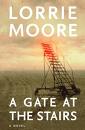
A Gate at the Stairs, by Lorrie Moore

I began this post last week, but rather than finishing it I kept moving on to other reviews. After taking stock of my lack of progression I had to admit it: I was having an issue. Why the procrastination? My ambivalence was rooted in the fact that I recommended A Gate at the Stairs to a close friend, who ended up not loving it. I felt terrible, like I had set up a blind date that bombed. Not that I've ever set anyone up. And I hope I never do - jeez, what responsibility! Still, every time I recommend a book I feel like I'm asking the would-be reader to take a chance. Invest a few hours. These days time feels so precious, that to ask a friend to give up even this relatively small amount of time feels akin to asking her to put herself out there on a blind date.

To add insult to injury, it turns out that the book summary printed on the back of the audio version is inaccurate. Kind of off-putting.


In A Gate at the Stairs, Tassie Keltjin is a young, Midwestern college student who gets a job as a nanny for a couple who are in the process of adopting a biracial baby. Tassie is not overly ambitious, has a bit of a slacker mentality, but she's clever and funny and is a keen observer of those around her. She's young and naive, coming-of-age and facing complex situations. I fell in love with Tassie, I understood the way she thought and her stupefied confusion at the craziness going on around her.

There were a lot of suspenseful subplots in Moore's new book, and not all of which wove together neatly. Some of these strands landed way far afield from here I expected them to, or fizzled out altogether. Still, with a character so wry and engaging, I couldn't help but love this story. Once I fall in love with a book's protagonist, I'm a goner; I can't help but love the book.

I am two-thirds of the way through Lit, by Mary Karr, and I feel confident I'll be able to recommend it without any reservation.

Saturday, March 20, 2010

Well Enough Alone, by Jennifer Traig


Last night my middle child woke me up from a deep sleep. She stood over my bed, mute, a confused look on her face. And then she was gone. I knew something was wrong, although I had no idea what it could have been. I flung off my covers and ran down the hall looking for her. After a step or two, understanding reached my ears, as I heard a thunderous heaving coming from the bathroom. What followed, well, let's just say it brought to mind both Linda Blair and a fire hose.
Which is such a lame segueway into Well Enough Alone, Jennifer Traig's story of her hypochondria. Still, sick is sick, whether the malady is a real stomach flu or an imagined Guillan-Barre syndrome.
Traig's first mental illness, obsessive-compulsive disorder, proved great grist for her writerly impulses. She has penned several "How-to" craft books, putting to good use her restless energy and empty orange juice containers. Her first memoir, Devil in the Details, gave us our first glimpse into her mind as she details her girlhood, driven to distraction, counting, praying, and washing. From my perspective, Traig is saner than a lot of us. She has an endless humor and an unending generosity with herself as she looks at her mental illness in a way that is refreshingly and unflinchingly honest without being the least bit whiny.


Jennifer's story continues in Well Enough Alone. This quirky memoir examines her hypochondria, enriching the narrative by giving us a wealth of fascinating information about the history of this condition, as well as by detailing many of the ways it manifests. Each chapter begins with a black and white reproduction of a grotesque disease of yesteryear, usually dermatological and disgusting, as if to say: this is what I was convinced I suffered from today! Never has mental illness been so funny. Traig includes an appendix with headings such as: Handy Phrases for the Hypochondriac Traveler as Translated Somewhat Unreliably on my Computer, Ten Horrible Diseases and the Chances You Already Have One of Them, and a Fruit/Tumor Comparison Chart.


So, you might ask, where are all the Jewishly-related books I promised to review? I think of this memoir as a Jewish book because there are so many Jewish hypochondriacs! One might suspect in is in the genes. Honestly, I can't think of any of my Jewish friends (and I don't exclude myself from this group) who doesn't have an Aunt Goldie or Uncle Moshe who, despite having a lot of worry and a dressing table full of prescription bottles, has nothing really wrong with them.
The best part of Well Enough Alone is the happy ending, where, once on Prozac, Traig's symptoms go away and she meets her intended, ending up not alone. Couldn't have happened to a nicer author.
Gotta go. I'm expecting a call from my doctor about this rash on my forearm that looks suspiciously like leprosy....

Friday, March 19, 2010

Sum, by David Eagleton


David Eagleton has a webpage, Possibilian.com, that explains the underlying principle of this strange bird of a book. Eagleton writes that a possibilian is someone who accepts that our humanity imposes limitation on our ability to understand the universe, takes the position that any way we construct to understand the universe is basically a made-up story, and is willing to entertain all possibilities.


Working within this premise, Eagleton, a neuroscientist, writes forty vignettes, each one exploring a different possibility of what might happen after we die and how that particular narrative speaks to what our existence on earth means. Eagleton is a writer with a gargantuan imagination. Most, if not all of these possibilities seemed completely outlandish, the equivalent of a Dr. Seuss afterlife story. But then again, who knows?

Sum is not for everybody. It is not a novel, not non-fiction, and not even sci-fi, but more of a manifesto of the Possibilian mindset. But if you are a "what if?" kind of person, or a sci-fi lover, or like me, just extremely curious, Sum might be a stepping stone for considering new possibilities of thinking about ourselves and our place in the world.

It's all about questions. Sum is, at its core, one big question. For those of us preparing for the upcoming Passover Seders, questions come to the forefront: first and foremost, the four questions, but also the myriad questions posed and answered by various rabbis in the Haggadah. I never thought about the importance of questions in the Seder as a whole. Below is the thought-provoking link that explores this topic.

http://www.rabbisinclair.com/articles/about-romanwater.aspx